
Fareed Zakaria, (host of CNN’s Fareed Zakaria GPS)
“The cell phone has more computing power than the Apollo spaceship that went to the moon”
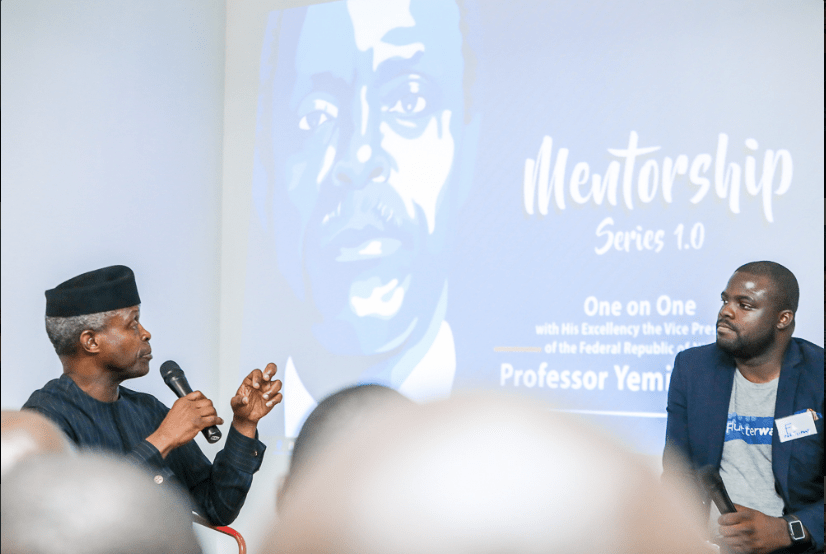
This famous quote above from Zakaria features whenever Vice President Osinbajo, SAN addresses young people.
What he is saying is with the technology embedded in a mobile phone, there is a lot one can do that was previously impossible. This quote, like many others which have been a core of the VP’s speeches, is his way of reminding young people how incredibly lucky they are to be living in the most advanced time in history.
In order to encourage young people operating in the tech space, with the approval of President Muhammadu Buhari, Prof Osinbajo established the Advisory Group on Technology and Creativity. He chaired this Council which brought about regulatory reform that saw the issuance of new licenses granted by the Central Bank of Nigeria, CBN, to FinTechs, for payment processing. Prior to this, CBN only granted licenses to banks to the tune of N25billion.
As a result of this reform, within the last few years, some Nigerian tech companies, have raised millions of dollars in investment, with 6 of them (Opay, Paystack, Flutterwave, Andela, Piggyvest and Jumia) attaining Unicorn status despite two economic recessions. The CEOs of these companies are also young men and women, some of them under the age of 40.
It is important to note that this Advisory Group was also instrumental in shaping the narrative of positive government participation and engagement in the tech ecosystem and building of a digital economy.
Part of Government’s engagement with tech global players included Prof Osinbajo hosting the CEO of Facebook (Meta) Mark Zuckerberg in Abuja, Nigeria, on his first visit to sub-Saharan Africa. During that visit, he participated in one of government’s event for start-ups tagged “Aso Villa Demo Day”, joining the President and Vice President to host companies looking to pitch their business ideas.
The Aso Villa Demo Day (AVDD) 2016, was initiated and hosted by Prof Osinbajo, in collaboration with private sector players such as Sahara Energy and Access Bank, and had startup investments funding of about $3million from the Growth and Employment (GEM) Project, a World Bank funded project implemented by the Federal Ministry of Industry, Trade and Investment (FMITI).
The idea behind the call was to support the Presidency’s drive to celebrate and empower the most promising and highly scalable indigenous technology start-ups providing innovative solutions to local challenges in Nigeria. 289 applications were shortlisted for participation and 81 participants went through to the final level. The sum of NGN756.3million was approved for disbursement to the startups.
Since Mark Zuckerberg’s visit to Nigeria on Prof Osinbajo’s invitation, Facebook launched its first African SME Council in Nigeria to support small and medium-sized businesses throughout Africa. The company worked with Nigerian business owners across various industries who use Facebook effectively and provided them with digital tools to drive customer growth.
The VP also met with Facebook’s Chief Operating Officer, Sheryl Sandberg in Davos, as part of his engagements at the World Economic Forum in January 2018. They continued talks around assisting Nigeria in promoting a conducive environment for innovation and growth.
On the back of this meeting, in May 2018, Facebook, in partnership with NG_HUB, kicked off operations in Yaba, Lagos State. The global tech giant has empowered local businesses, tech start-ups and aspiring professionals on leveraging digital tools to grow their businesses. In addition, they are training and supporting thousands of students, SMEs, and entrepreneurs across Nigeria through a series of digital skills training in collaboration with other tech hubs across Nigeria.
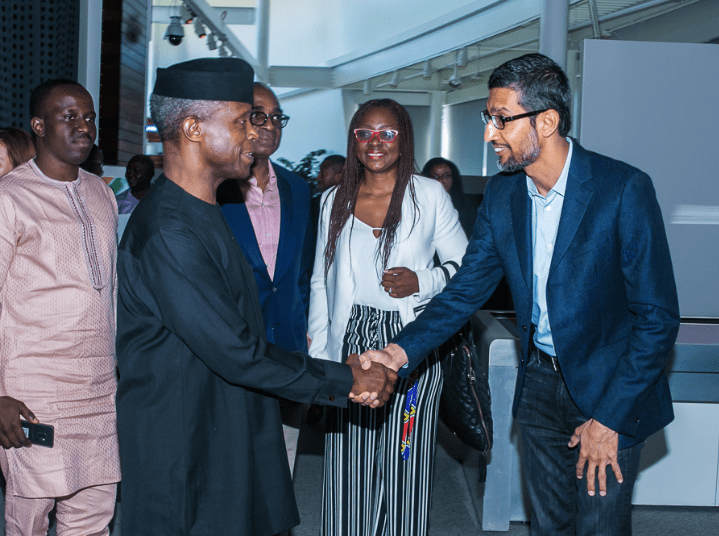
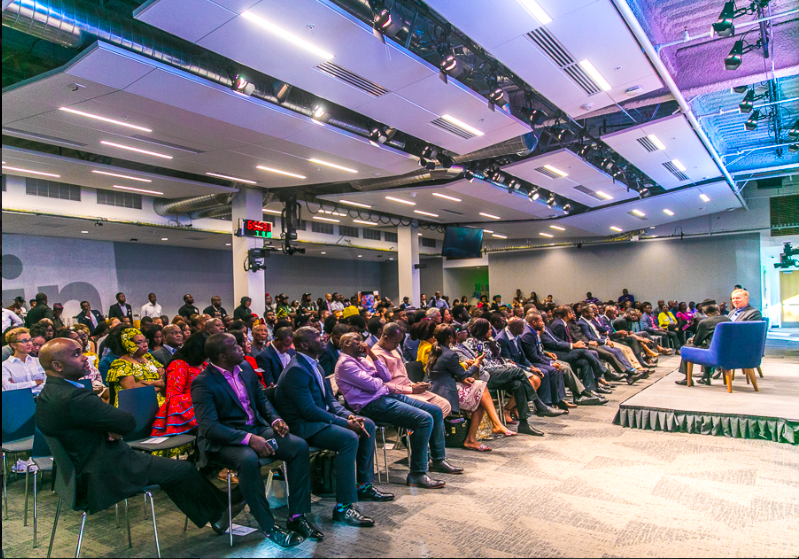
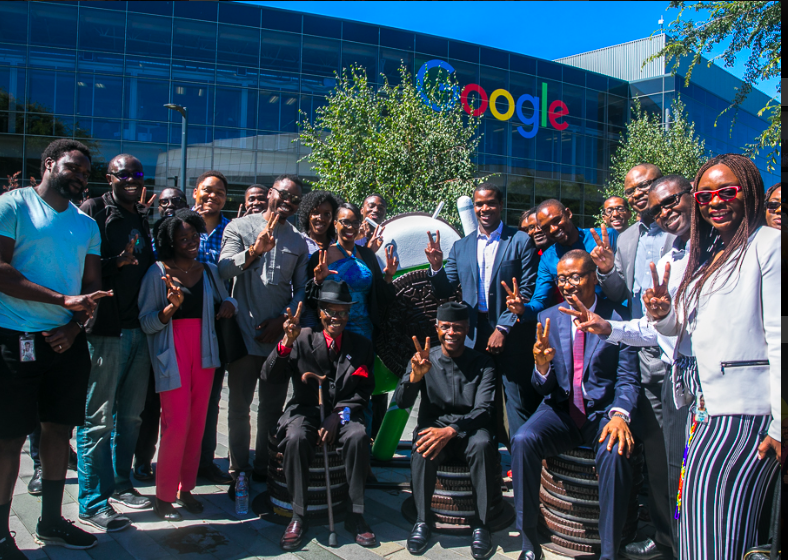
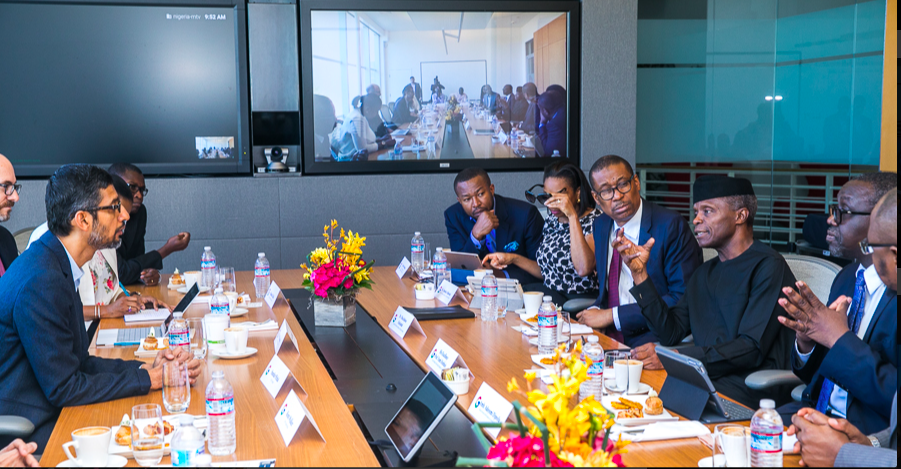
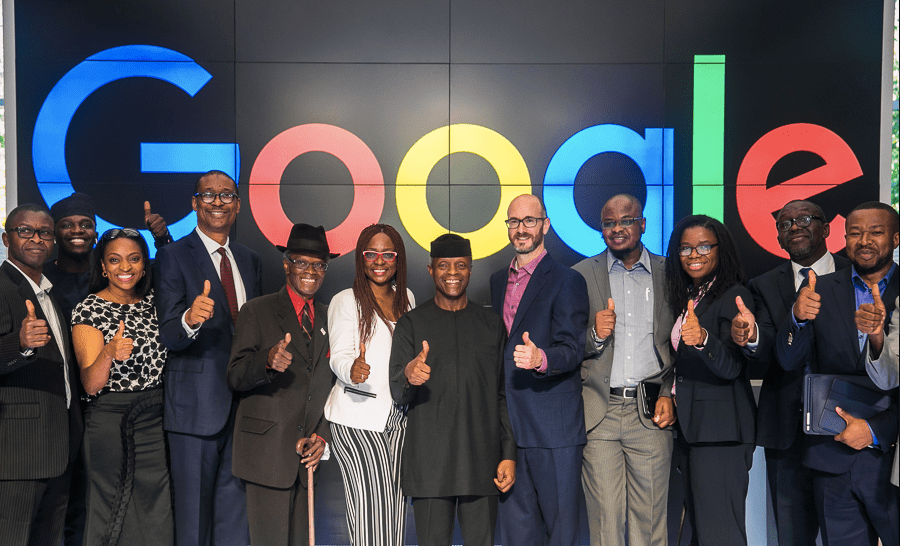
As part of the activities of the technology advisory group, Prof Osinbajo led a delegation of senior government officials and private sector players to Silicon Valley in the U.S, visiting tech companies like Facebook and Google. He met Google’s CEO, Sundar Pichai, as well as top executives of professional networking website, LinkedIn.
He highlighted progress made in Nigeria’s technology and creative space and Nigerian start-ups also got a chance to pitch their businesses to tech investors.
Subsequently, Google launched a free public Wi-Fi service in Lagos and in Abuja; opened a new developer space in Nigeria; started an accelerator programme and invested in digital skills training for hundreds of thousands of Nigerians.
Google’s Government Affairs & Public policy Director, Doron Avni had this to say about the Vice President’s interest in technology: “obviously, we have an excellent partner here (Prof. Osinbajo) who has been doing God’s work. It is thanks to leading partners like him that we are able to be helpful in communities in which we operate.”
Furthermore, Prof Osinbajo engaged with Microsoft in 2019, meeting with a delegation led by Phil Spencer, the Executive Vice-President of Gaming. Both parties agreed that the tech company would improve its investments in Nigeria, and in 2020 Microsoft opened an engineering office and established an African Technology Development Centre in Nigeria.
The VP, thereafter, led the Federal Government’s partnership deal with Microsoft after meeting with the President, Brad Smith in January 2021. The tech giant committed to training 5,000,000 Nigerians in digital skills and support Nigeria’s open government initiatives and broadband expansion efforts.
In continuation of the technology giant’s investment in Nigeria, they will be supporting the Digital Transformation pillar of the Federal Government’s Economic Sustainability Plan, which again, is under the VP’s purview.
When Huawei, another global tech company met with Prof Osinbajo, he used the opportunity to ask for job opportunities for the Nigerian youth. He called for the development of an ecosystem of competent Nigerians who could work locally and internationally through a business outsourcing model. In response to the VP’s request, the company hired no less than 280 Nigerians at a recent job fair.
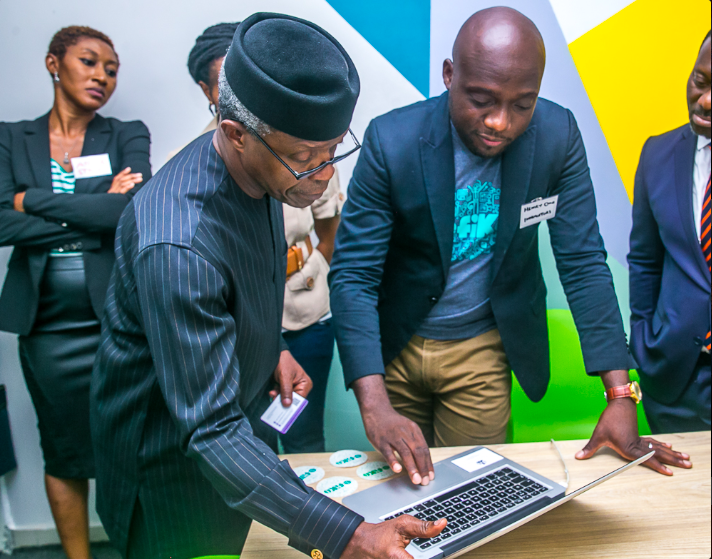
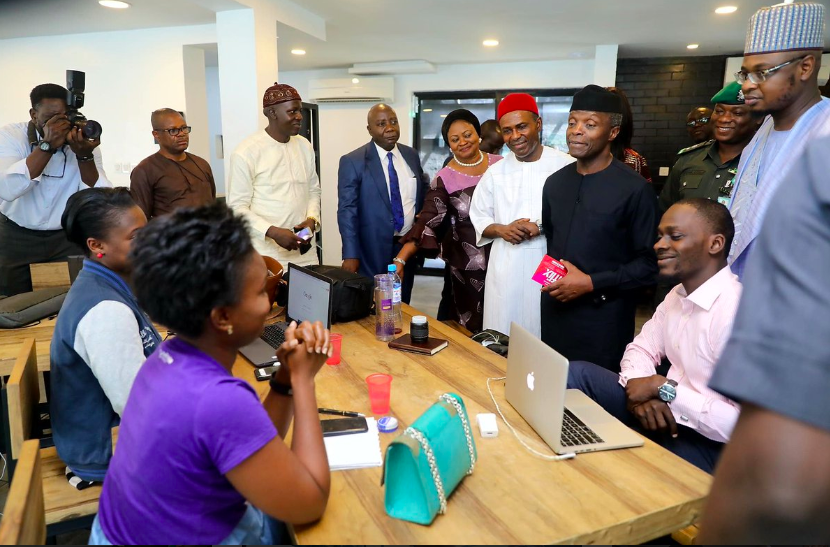
Showing his support for indigenous tech companies, Vice President Osinbajo went on a tour of existing private-led technology enterprises and hubs. They were Paystack, Andela, Workstation, FarmCrowdy, African Fintech Foundry, and Co-Creation Hub.
After this tour, the Federal Government then partnered with the private-sector to establish tech hubs in the 6 geo-political zones in the country. Most of these hubs were launched by Prof Osinbajo.
Some of them include:
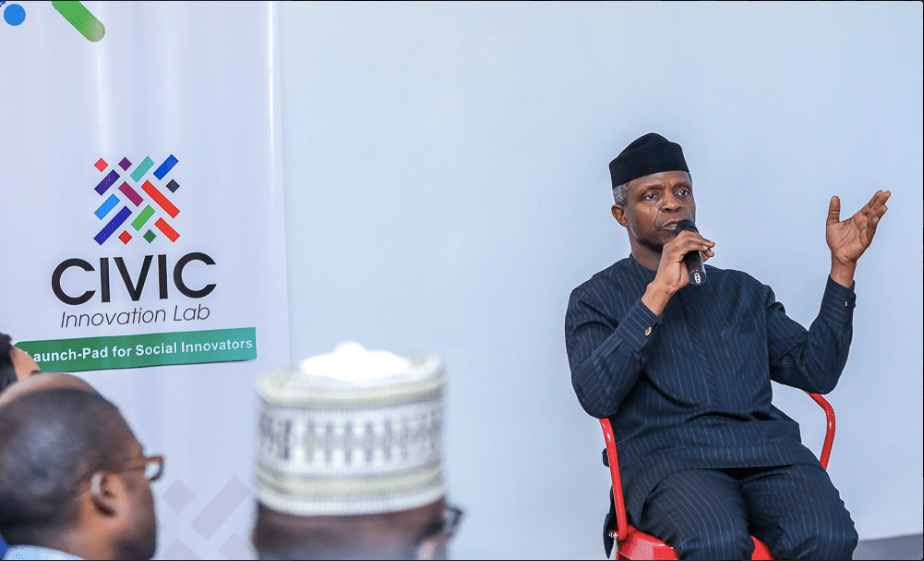
Civic Hub in the FCT, which helps innovative startups navigate the first steps to building a viable business;
Ventures Park also in the FCT, a hub which already exists, was supported to run incubation programmes in the Northcentral region of the country. Likewise, the hub provides a co-working space where entrepreneurs, freelancers and brilliant minds, sharing interests and goals, express their creativity and collaborate;
PremierHub in Ondo supports businesses located in the Southwest by equipping them with the resources, space, tools to deploy their innovative ideas for the development of Nigeria. With the support of Prof Osinbajo, the hub has expanded to Lagos and some of its startups have scaled up their businesses within Nigeria and internationally. Examples are Life Pro, SmartTeller, Seclot, Plantheus, Trusmart, Agrmax, Wii Technologies and several others;
Edo Innovates Project in Edo is South-south’s biggest and most effective startup support project, facilitating training and skills development programmes. There’s also the creation of the Edo Tech Park project, Edo Creative Hub and the Edo Future 500 which supports entrepreneurship activities in the State;
Nigeria Climate Innovation Centre hosted in Lagos, is in partnership with the World Bank and the Pan Atlantic University, focused on tapping into growing clean technology market opportunities and to commercialize and scale-up innovative private-sector solutions to climate change;
North East Humanitarian Hub, Adamawa, being run in partnership with the International Committee of the Red Cross (ICRC), and the Presidential Committee for North East Initiatives (PCNI) is dedicated to provoking tech-based innovative ideas to tackle the challenges of Internally Displaced Persons in the States affected by the insurgency. The hub has a 3D Printing Lab, and prosthetic limbs are printed for victims of the insurgency. The Hub has also recently, in partnership with the UNDP, established an Agric hub in Makurdi Benue State, focused on building Agritech startups.
Another worthy mention is the use of technology in the implementation of Federal Government’s Social Investment Programmes, SIPs, under the supervision of the Vice President’s office. For the enrollment and payment of over 500,000 N-Power graduates, a Nigerian company was hired. They designed a portal and tools robust enough to deal with over 4million applications online. The same company designed the payment platform to ensure that all beneficiaries were paid promptly every month.
Under the Government Enterprise and Empowerment Programme (GEEP) responsible for giving out microcredit loans to petty traders, three Nigerian technology companies; Mobileforms, GDM and Eyowo were employed. The work of these companies included the crowd sourcing of data, capturing of bio-data, including photographs of beneficiaries, paying out the loans, collecting repayments and giving further loans to those who repay. These companies ran by young Nigerian entrepreneurs delivered the largest Social Investment Programme of its kind in Africa, flawlessly.
Additionally, there is the Bank of Industry’s Growth Platform which is Africa’s largest infrastructure for direct interventions to MSMEs. The growth platform’s command centre at the BOI now has 22,000 agents, equipped with its proprietary mobile technologies, they receive mandates to capture and digitize businesses eligible for its growing suite of programmes.
Over four million micro, small and medium enterprises have been direct beneficiaries of the over N150 billion deployed in the past five years. 57% of these MSMEs are owned by Nigerians below 35 years of age, and the team of Nigerian professionals behind this work are largely young, with an average age of 28 years old.
As a result of these interventions, there has been a 99% cumulative annual growth rate in technology investments into Nigeria between 2017 and 2021. According to the African Tech Startup Report, 2022, “Nigeria held onto the crown in 2022 as the best funded country in Africa for the second year running, and with the most funded startups. The country saw 180 startups (28.4 per cent of Africa’s funded ventures) raise a combined US$976,146,000 (29.3 per cent of the continent’s total) – substantially ahead of all other countries on both counts.”
An important milestone to note is the establishment of the Digital and Creative Enterprises (iDICE), an over $600million project that will support young tech and creative sector entrepreneurs through the provision of finance, skills development and infrastructure. This is being supervised by the Vice President’s office in collaboration with the African Development Bank.
It’s no longer news that technology has become an integral part of our lives, and it’s the driving force behind how we live, communicate, work, do business and even entertain. In some aspects, technology has made our lives easier; we are more connected than ever before, and it continues to shape our world in numerous ways. No one understands this better than Prof Osinbajo, and this shows through his passion, commitment and involvement in the tech space in Nigeria.
References:
The African Tech Startup Funding Report by Disrupt Africa, 2022
https://theventurespark.com/about
Google.com

 Olaolu Beckley
Leave a comment